
Kindness Doesn't Rush You
Finding God even when I don't feel okay

I miss cooking.
I’m feeling a little stuck, frozen in what I know is a PTSD response. Because of that, I’m a little down, feeling nostalgic for a time when my body didn’t hurt just because I tried to bake something while standing.
You don’t realize—until you live with daily, fluctuating pain—how much your life has to change when you have a chronic illness. Mine isn’t autoimmune; all of those tests came back normal. So, they labeled me with Fibromyalgia (that is or isn’t autoimmune?). Even today, though more is known about the condition, it carries a sort of shame along with it.
At least, it does for me.
People say all the time that they have it; you probably know at least five people who do. But unless you live with someone who has it, or you have it yourself, you wouldn’t know by looking at them that it is a deeply debilitating condition. On top of that, I have Degenerative Disc Disease, which I was diagnosed with at twenty-five. Now forty-seven, I’ve had a long time to adjust to this life. Most of the time, I cope very well. I know that God uses our weakness, and I’m all about God using whatever He needs so that others can experience the hope I carry inside.
Today, though, I’m tired.
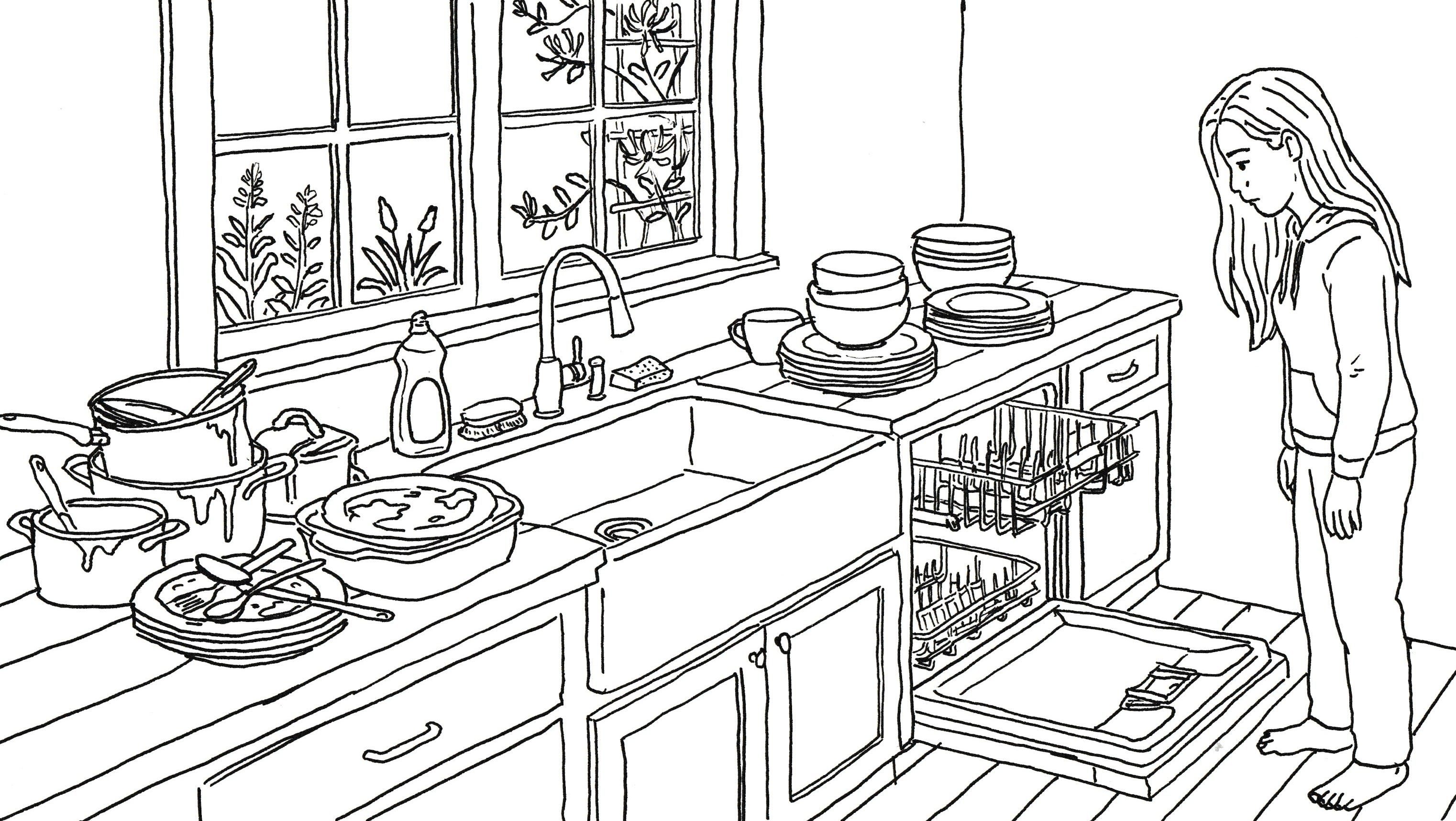
I am frustrated that I am so, so tired. Even more, I am frustrated by a dishwasher that needs to be unloaded, other dishes to be put away, dirty dishes to be loaded, and the ones that must be washed by hand. I’m frustrated with my house not being my house—with having house guests who do not care to keep my space tidy, the way my brain craves for it to be.
When the pain or the fatigue are bad, nothing gets done. With my husband’s cancer, there is even more around the house that simply doesn’t get done anymore. On the bad days, this weighs on me.
I know that I will sleep and tomorrow will be better. My perspective will shift, and I will not feel the same bleakness I do right now. But it is important for me to be open about where I am. While I am a sarcastic, witty person most of the time—someone who loves to laugh and be with her family—today I just want to hide. I want to crawl into bed and pretend I have no responsibilities, no mess to clean, no people to entertain.
I just want to exist as I am.
And yet, I always feel a certain pressure to show the “better” side of me—the part that isn’t exhausted from holding a body that feels like it is made of concrete. The smile that says, “I’m great and God is good.” Both of those things are true, of course. They can still be true while I am in my feelings. I used to shame myself for not “auto-correcting” my brain back into soundness. I used to think you just had to tell yourself it’s all going to be okay; just believe God is enough and the worries will go away.
I understand that from a logical standpoint, but I am not a person of logic. Logic doesn’t always come easy to me. Common sense? Yes. Logic? No. Hard pass. It’s not that I don’t want to be logical; it’s just that my emotional being often leads the rest of my brain.
It is a slow undoing—a very, very slow process of setting the shame aside and putting down the heavy weights I wasn’t meant to carry. In the past, I was so quick to rush to the ending. To get to the “good part.” To stop wallowing and just move forward.
But that didn’t help me snap out of these moods that come unbidden. Telling someone to “just be positive” when they are desperately trying to hold onto their faith and their sanity is just cruel. Kindness doesn’t rush someone past what they are feeling. Gentleness doesn’t demand that you immediately change your perspective so that you can see things more clearly.
Kindness and gentleness—the way of life that Jesus led with—isn’t about performance. It’s not pressure to never feel anything bad. It’s the opposite.
These virtues gently coax us out of the lull we get stuck in. They give us space to breathe. To feel. To sit with the uncomfortable. Shame will never piece someone back together; it will never pull them back to a place of faith and steadiness.
I have learned, in my four years of therapy, that it’s okay to feel like this. There’s no shame in your feelings. Feelings, in and of themselves, are neither right nor wrong. In fact, pretending not to have them is dangerous to your mind and your body. What we don’t express gets stored in the body. It leaves you on high alert, never feeling safe enough to let your guard down—because if you do, you’ll actually have to feel whatever you’re trying to avoid.
I know this is jumbled and flitting from one thing to the next. But that, too, is okay.
This is me, right now. And I’m not okay.
But I know that I will be. I know that God is good, and He always has been. I know that with a little sleep and a good meal, I will recalibrate. But for now, I’m just sitting in this place of feeling frozen, opening up my heart to whoever chooses to read this.
Jamie
The Weight of Stillness is a reader-supported ministry.
There will never be a paywall blocking you from full
access to what God is teaching me as I embrace
stillness. But if you are led to donate to this ministry
God is birthing out of my journey, you can become a
paid subscriber.
Savveeddd
I’m praying for you, Jamie. 💗💗