
The Line Has Been Remade
The Sound of a Bloodline Being Redeemed

On Monday, we looked at the misconception that brokenness makes us less worthy. I used to try to hide my story, thinking that the wounded pieces I carried around somehow made me less valuable than those around me. But the most powerful weapon isn’t the one that avoided the fire. Sometimes that comes through what has been shattered and remade.
By confronting the broken parts of our past, we begin to move toward being remade. We can shift from a life of survival as a Ranger in the shadows to the realization that we have a pre-ordained purpose. But this journey involves accepting a hard truth:
Sometimes everything has to be broken in order to be transformed into something stronger.
You aren’t just shattered.
It’s not that simple.
You are so much more than that.
You are in the process of being forged anew.
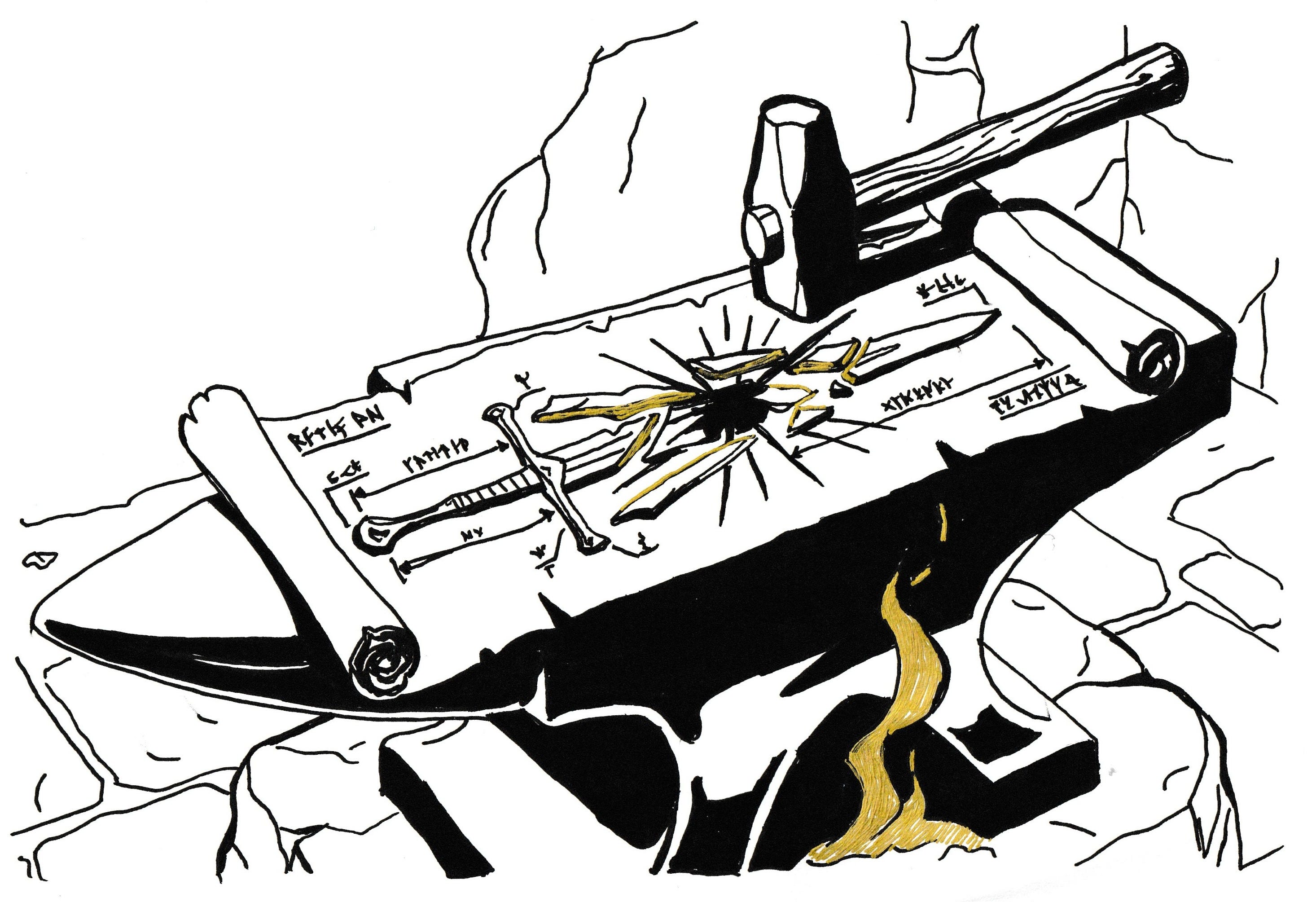
The Reforged Line
This process of being remade echoes through the history of Narsil (Aragorn’s sword) in The Lord of the Rings. We often look at our mistakes, trauma, or paths that ended in dead ends as just a collection of useless shards.
A broken line.
For a long time, I believed the lie that because things were broken, my life was finished. But the broken line of our individual heritage isn’t a prison.
It is actually a blueprint.
In order to be remade, we have to stop trying to glue the old pieces back together on our own. We have to admit that the foundation was always broken. And we have to take those shards to the forge.
We have to have the willingness to surrender the entire broken sword to the Blacksmith and the fires of the forge.
This same idea is echoed in Brandon Sanderson’s Words of Radiance, where the character Pitt reflects on the brutal refining process he had faced. He looks at his commander and says:
“He broke us right good, didn’t he, sir?”
“Yes.”
“Turns out, though, men can be reforged. I wouldn’t have thought that.”
This realization is the turning point. When we stop mourning the fact that we were broken, we can finally begin to cooperate in the healing work that comes with letting God reforge the broken identity we took on while trying to survive.
From the Forge to the Dimholt Road
When Aragorn finally accepts the reforged sword from Elrond, he stops being a Ranger hiding in the shadows of his ancestors’ failures. In that exchange, he startedthe journey toward his true purpose. He realized that his history was a foundation, not a sentence.
Going back to the book, The Fellowship of the Ring, this reforging happens at the very start of the journey to take the ring to Mordor to destroy it. Tolkien shows us that being remade wasn’t a reward for finishing the quest. It actually provided Aragorn with the equipment he needed to begin the journey:
“The Sword of Elendil was forged anew by Elvish smiths, and on its blade was traced a device of seven stars set between the crescent Moon and the rayed Sun... Very bright was that sword when it was made whole again; the light of the sun shone redly in it, and the light of the moon shone cold, and its edge was hard and keen. And Aragorn gave it a new name and called it Andúril, Flame of the West.” (Chapter 3: The Ring Goes South)
While the film saves this moment for the end, Tolkien’s original story reminds us that we are remade not as a reward for finishing, but as the equipment we need to take the road ahead of us. The sword, while reforged, carries its history. But it has also been fundamentally changed. And it is this transformation that leads an incredible moment in The Return of the King.
Aragorn, finally stepping into the identity he spent eighty-seven years avoiding, enters the Dimholt Road to face an army of the dead. These are spirits trapped by their own past failures and broken oaths. When Aragorn demands their service, the Dead King sneers at him. He doesn’t see a King; he sees the brokenness of a lineage that failed long ago.
The Dead King proclaims: “That line was broken.”
But Aragorn doesn’t flinch. He doesn’t argue about the past or apologize for the years he spent in the wilderness. He simply raises the sword and replies:
“It has been remade.”
Facing the Ghosts of the Past
For so long, I lived as if my line was permanently broken. I believed that the neglect of my early days and the generational cycles I inherited were the final word on who I could be. I looked at the shards of my life and thought they were just debris to be hidden. I didn’t realize that those very shards were the material God was waiting to use. But he needed my cooperation. He needed me to yield to His capable hands, so he could reshape and reform me into what He had always envisioned for me.
This is the hope for us:
Because we are made to be whole, we can finally face the ghosts of our past and command their attention. We can point to the work God has done in our hearts and say with confidence: “I have been remade.”
Just as the Dead Army found their peace when they finally stepped into the light of their true purpose alongside their King, our healing often happens when we stop hiding and start fighting alongside the army God has gives us.
The scars we carry aren’t signs of weakness. They show the proof that we have surrendered to the forging.
I’m finally learning that I don’t have to fight the dead things of my past with a broken weapon.
I have Jehovah Sabaoth, the God of Angel Armies, on my side.
It is okay to stop being the Ranger. It is time to become who you were born to be.
You are an heir to a royal priesthood.
You are not defined by your trauma, and you do not have to hide it any longer.
You can become a new creation, built on a foundation that cannot be shaken. When we surrender to the process of being remade, we cannot be broken.
Jamie
The Weight of Stillness is a reader-supported ministry.
There will never be a paywall blocking you from full
access to what God is teaching me as I embrace
stillness. But if you are led to donate to this ministry
God is birthing out of my journey, you can become a
paid subscriber.